|
March is named after Mars, the Roman god of war. A long time ago, it was the first month of the year because it’s when spring starts. January and February were added to the calendar about 2700 years ago so March is now the third month. The winter is finished and spring begins. The weather gets warmer and things start growing again in the garden after the cold winter. There are spring flowers everywhere, like crocuses and daffodils. There are lambs (baby sheep) in the fields. At the end of the month, we put the clocks forward one hour. After that, we have more light in the evenings. Mother’s Day is usually in March although sometimes it's in April. It's three Sundays before Easter. (The date of Easter changes every year. It depends on the moon.) We give cards, flowers or other gifts to our mums and maybe to our grandmothers as well. This day is sometimes called Mothering Sunday. Easter is sometimes in March but more often in April. You can read about Easter here. Another special day for some people is Saint Patrick’s Day. This is a national holiday in Ireland and Northern Ireland but not in England. Recently, it has become popular in England too. In some cities, there are parties with Irish music and dancing. Some people go to the pub and drink Irish beer. The first Thursday in March is World Book Day. School children get a special World Book Day voucher worth £1. They can get a book which costs only £1 or they can get £1 off a full-priced book. There are fun activities in school about books and some schools ask children to dress up as a character from their favourite book. Would you like free lessons and tips for learning English sent to your email address? Sign up for my newsletters by clicking the button below: 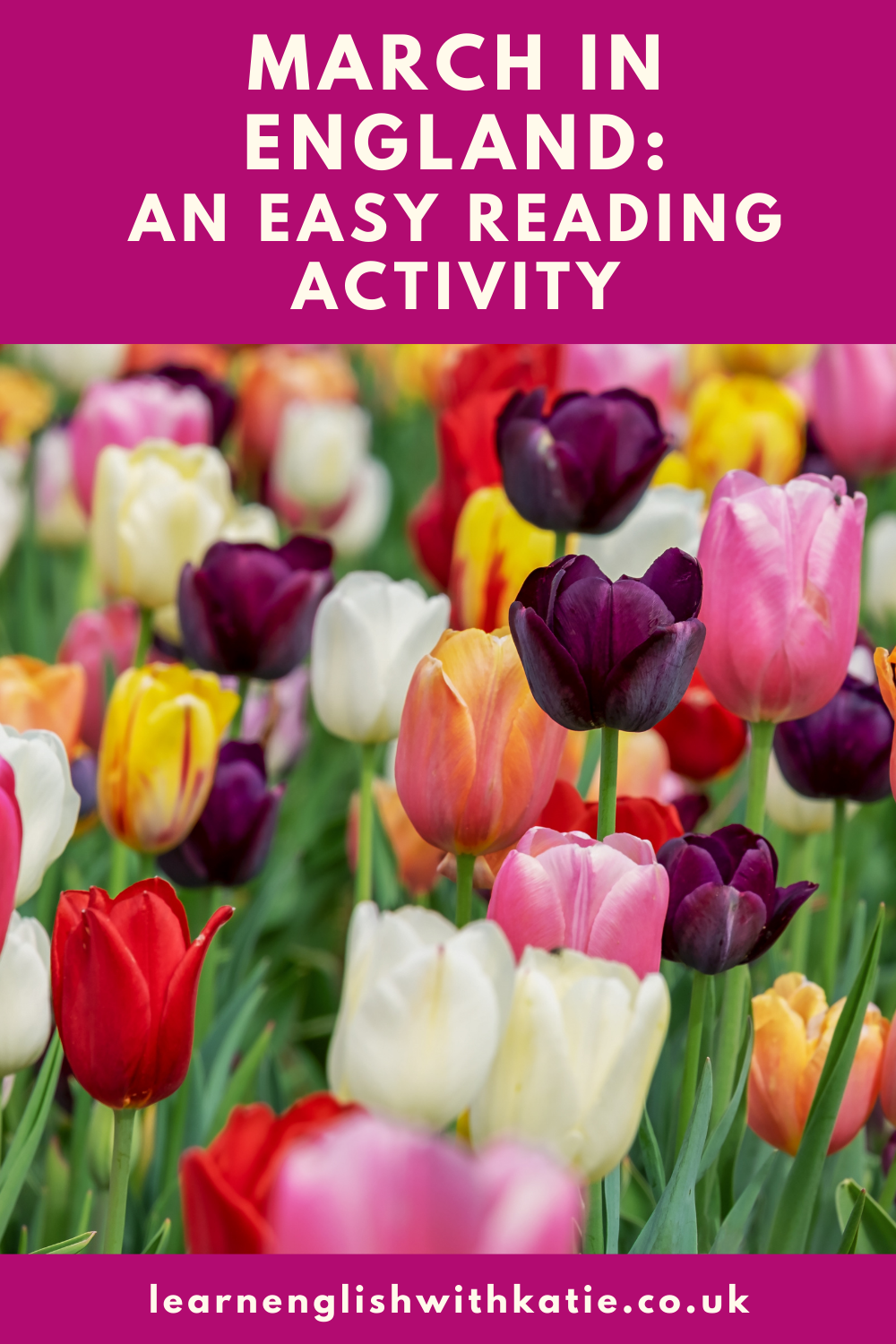
0 Comments
Your comment will be posted after it is approved.
Leave a Reply. |
About the blogFollow the blog for mini lessons and tips on how to improve your English. Categories
All
Archives
July 2024
|
 RSS Feed
