|
When you are trying to improve your English, it’s good to find enjoyable ways to do it. If it’s something you like doing, you will be more motivated. This post is for people who like music. Why listen to songs? Firstly, this is a good way to improve your listening skills, although you should be careful with which songs you choose. Slower songs are often easier to understand, especially for beginners. Secondly, listening to songs is good for learning and remembering vocabulary, idioms and even grammar. I can still remember some of the French songs I learnt at primary school over 40 years ago! And I remember what the words mean! I recently tried to learn some Spanish and I listened to a song called “Voy a Bailar”, which means “I’m going to dance”. Ever since listening to this song, I have never forgotten the word for “dance” or how to talk about the future in Spanish!! Warning Songs often contain slang . There is nothing wrong with learning a bit of slang as long as you know that it IS slang and don’t use it when you should be more formal. Also, be careful about using songs to learn grammar. As you saw in my example from earlier, it is possible to learn some grammar from a song but song lyrics are not always complete sentences and they don’t always follow standard grammar rules. In English-language songs, singers often sing “don’t” instead of “doesn’t” or “ain’t” instead of “isn’t”. The Rolling Stones sang “I can’t get no satisfaction” but we usually say “I can’t get any satisfaction”. This kind of language is acceptable in a song but you need to know that it is not OK in formal English. So how can you use songs to improve your English? Here are some suggestions: 1. Search Google or YouTube for a song that you like and just listen to it. Simply type the name of the song, and maybe the singer or band too, into the search bar to find the song. 2. The lyrics (words) to almost every song can be found online. Search Google for the lyrics of the song and read them. For example, type “Adele Hello lyrics” into Google. It’s often easier to understand the words when you read them. Even native speakers sometimes find it difficult to hear all the words correctly! Then listen to the song and read the lyrics at the same time. This will help you to understand the pronunciation better. Then perhaps you can listen again without the words. 3. Look up any words that you don’t know in the lyrics. Songs are a great way to improve your vocabulary. 4. Think about the overall meaning of the song. What is the singer trying to communicate? Sometimes the meaning is very simple and other times you have to think a bit deeper. 5. You can even find videos that show the lyrics. For example, try putting “Adele Hello lyrics” into the YouTube search bar. 6. If you want to, you can even sing along! (You don’t have to do this if you don’t like singing!) 7. Try to memorise a song, or just a part of a song. You’ll never forget the vocabulary ever again! 8. Look for the Lyrics Training website, lyricstraining.com, or the LingoClip app. With this, you can listen to a song and you have to type in the missing words or choose the correct word from a list. This is a good game to improve your listening skills. You can find songs and exercises at your level. 9. Look at songfacts.com and find the story behind the song. This is interesting and fun, as well as being good reading practice. 10. Listen to English-language songs while you are cleaning the house or walking to work! It’s something you can easily do at the same time as something else. Which songs should I listen to? Here's a list of songs for you to try. I picked songs with clear singing and words which are not difficult to understand. You might notice that a lot of them are slow. This is because slower songs are easier to understand but they are also the ones that I know and like! Just the Way You Are - Bruno Mars Chasing Cars - Snow Patrol Happy - Pharrell Williams Hello - Adele Someone You Loved - Lewis Capaldi Always on My Mind - Elvis Presley I’m a Believer - The Monkees All of Me - John Legend Haven’t Met You Yet - Michael Bublé Imagine - John Lennon Firework - Katy Perry California Dreamin’ - The Mamas and the Papas Penny Lane - The Beatles Money Money Money - Abba If you like a song, try something else by the same person or group. Adele, The Beatles and Michael Bublé have many other songs with easy-to-understand words. Listening to songs is a great way to learn English so have fun! For more tips on how to learn English, plus grammar and vocabulary lessons, sign up for my free newsletters here: 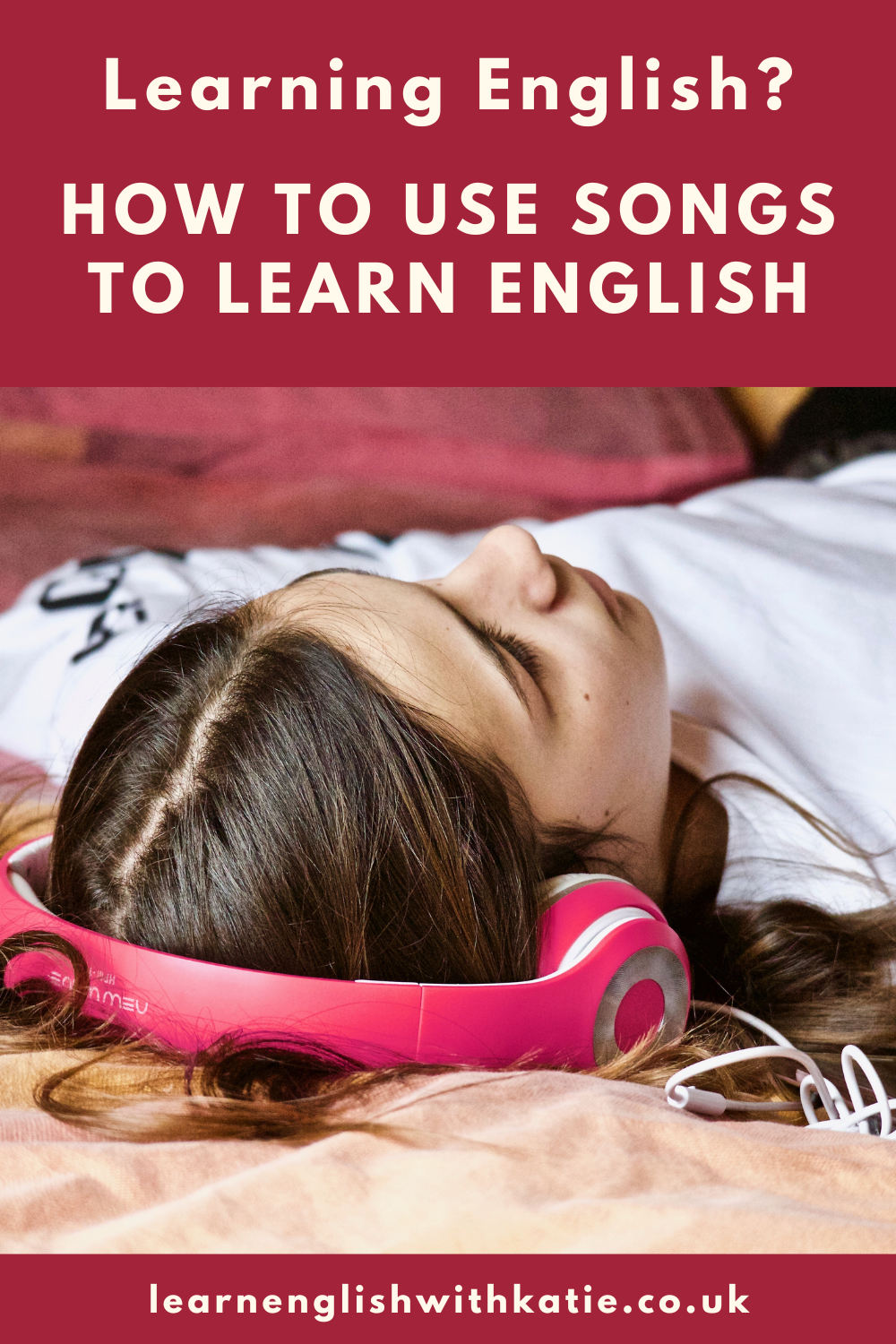
1 Comment
Sajid Nazir
7/2/2023 02:35:10 pm
Well done.You are really great teacher.I love you Your comment will be posted after it is approved.
Leave a Reply. |
About the blogFollow the blog for mini lessons and tips on how to improve your English. Categories
All
Archives
July 2024
|
 RSS Feed
